





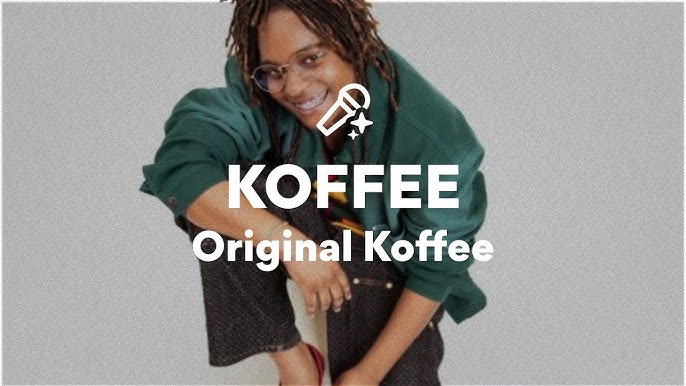
She started with a guitar, a phone camera, and a song for a sprinting legend. What happened next reshaped Jamaican music history.
Some artists spend years trying to build a moment. Koffee stumbled into hers at 17 — and handled it like she’d been preparing her whole life. Born Mikayla Victoria Simpson on February 16, 2000, in Spanish Town, Jamaica, she is now one of the most respected voices in contemporary reggae. But the story of how she got there says just as much as the music itself.
Net worth and earnings
Celebrity finances are rarely transparent, and Koffee’s are no exception. Based on available estimates, her net worth is currently believed to fall somewhere between $1 million and $5 million. That figure reflects income from multiple streams: music sales, streaming royalties, live performances and touring, international brand collaborations, and partnerships built on the back of her growing global profile.
What makes the number striking isn’t the amount — it’s the timeline. She built all of this before her 25th birthday, starting from a single social media video with no backing and no label behind her. The financial growth mirrors the career: steady, intentional, and earned.
Early life: Spanish Town roots
Koffee grew up in a Christian home where music was always present. Her mother was a steady, supportive figure, and church gave Koffee her first real stage. Singing in front of a congregation isn’t exactly low pressure — you learn quickly whether you have the nerve for it. She did.
Around the age of 12, she started learning guitar on her own. No formal lessons, just patience and repetition until the chords started making sense. Jamaica’s musical landscape surrounded her — reggae, dancehall, the tradition of songs that say something real — and all of it left marks on how she listened and eventually how she wrote.
By her mid-teens, she was writing her own material. Not as a hobby, but as a serious creative outlet. You can hear the discipline in her early work. She wasn’t trying to sound like anyone else.
The breakthrough: a tribute, a video, and Usain Bolt
In 2017, Koffee wrote “Legend” — a tribute to sprinter Usain Bolt following his retirement. She filmed herself performing it and posted it online. Simple setup, no production team, no PR strategy. Just a teenager on camera with a guitar and something genuine to say.
Bolt saw the video and shared it. In the hours that followed, thousands of people discovered Koffee for the first time. It was the kind of organic moment that no marketing budget can manufacture.
Almost immediately, the music industry took notice. She followed “Legend” with “Burning” and “Raggamuffin,” both of which confirmed that what people had seen in that one video wasn’t a one-off. The voice, the rhythm, the sense of purpose in her lyrics — it was consistent. It was real.
Music career and international success
In 2019, Koffee released Rapture, her debut EP. It was a tight, focused project — exactly the kind of introduction that makes you want more. The breakout track, “Toast,” became a genuine global hit. Celebrities shared it, radio stations outside Jamaica picked it up, and people who’d never paid close attention to reggae found themselves replaying it.
- Debut EP
- Rapture — 2019
- Grammy win
- Best Reggae Album 2020
- Record held
- Youngest winner ever
- Debut album
- Gifted — 2022
Then came the Grammy. At the 2020 ceremony, Koffee won Best Reggae Album for Rapture. She became the youngest artist ever to win Best Reggae Album — and the first woman to win the category as a solo act. It was a historic moment for reggae, for Jamaica, and for a generation of young artists who hadn’t seen themselves represented at that level before.
Her debut studio album, Gifted, arrived in 2022 after a deliberate wait. She didn’t rush it. The album showed real growth — more musical range, a broader palette of influences, but the same honesty that had defined everything she’d done before. Reggae was still the foundation, but she was pulling in pop, hip-hop, and dancehall without losing herself in any of them.
Her sound is difficult to pin down neatly, which is probably why it travels so well. Smooth melodies, rhythmic and rap-inflected verses, and a Jamaican accent she’s never softened or hidden. She sings about gratitude, faith, self-belief, and cultural pride — not as abstract ideals, but as things she actually lives by.
Personal life: relationships and family
Koffee is one of the more private public figures you’ll come across in the music world. She doesn’t offer much about her personal life, and she clearly means it that way. As of now, there is no confirmed boyfriend, partner, or spouse on record. She has no children. Rumors circulate occasionally — as they do with any well-known artist — but none have been verified, and she hasn’t addressed them publicly.
Her choice to keep that boundary isn’t evasion. It reads more like clarity. She knows what she wants people to pay attention to, and it’s the music. Given how young she was when fame arrived, that level of self-possession is quietly impressive.
What makes her stand out
There’s no shortage of talented people in music. What separates Koffee from many of her peers isn’t talent alone — it’s the combination of talent, consistency, and an unusual willingness to stay exactly herself regardless of what the moment seems to demand.
She doesn’t respond to online negativity. She doesn’t shift her image based on trends. She doesn’t chase features with bigger names just to climb a chart. She makes music that reflects who she actually is, releases it when it’s ready, and lets it do the work.
That approach is harder than it sounds. The pressure to perform a version of yourself that’s more marketable, more palatable, more whatever-the-algorithm-wants is constant. Koffee seems genuinely unbothered by it — and her audience can tell.
Legacy and what comes next
Koffee is 26 years old. She has a Grammy, two critically received projects, and a reputation for artistic integrity that most artists spend decades building. She’s already a reference point for younger Jamaican artists figuring out how to carry their culture into the global music conversation without compromising it.
What’s next is hard to predict — which, honestly, is part of what makes her interesting. She doesn’t move on a predictable schedule or follow a playbook. But if the first decade of her career is any indication, whatever she does next will be deliberate, considered, and worth paying attention to.
She came from Spanish Town with a guitar and a clear sense of who she was. Eight years later, she’s proved that was enough — and then some.
Francesca

Francesca is an entertainment writer who loves diving into the latest in film and TV. She shares news and stories that connect fans to the industry. When not writing, Francisca enjoys watching movies and discovering new shows


